

 Facebook
 X
X
 Pinterest
 Copy Link
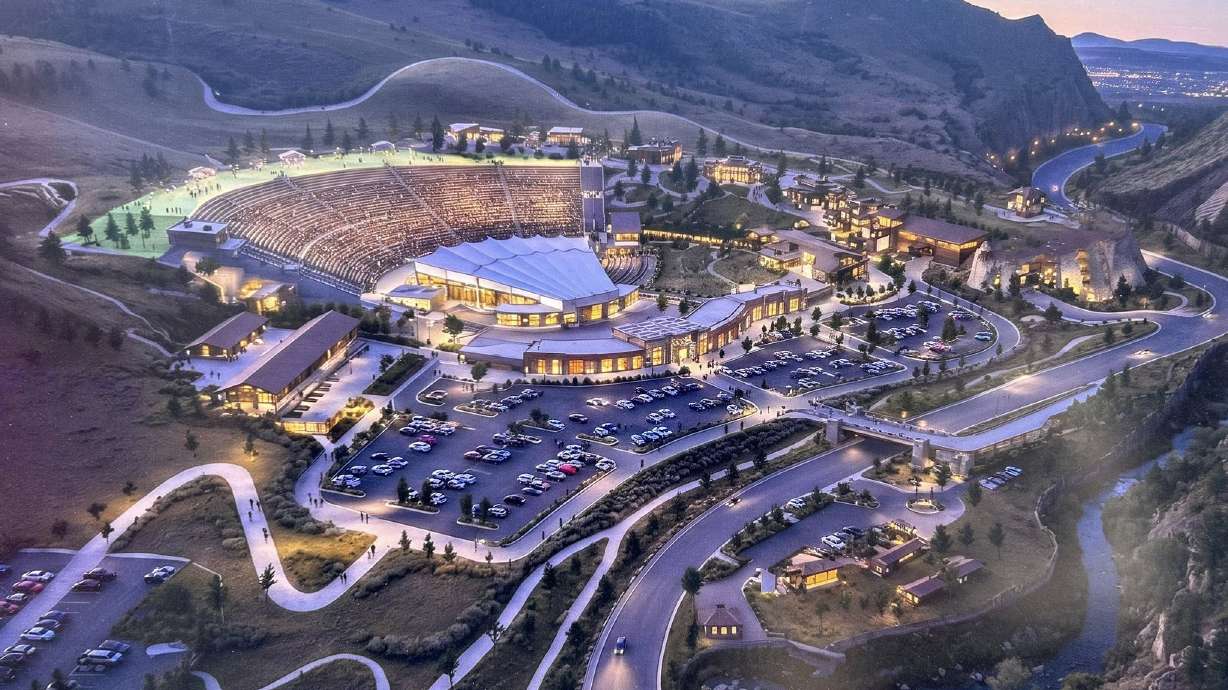
Vesper Amphitheater: What the Provo Canyon Announcement Means for Local Buyers and Sellers
Published by The Madsen Realty Group | May 2026
On the morning of May 19, 2026, Donny and David Osmond stood at the mouth of Provo Canyon — next to a century-old gravel pit — and announced something that no one in Utah County had seen coming at quite this scale: a 20,000-seat world-class amphitheater set to transform one of the most recognizable eyesores at the gateway to the Wasatch.
Here’s a quick rundown of the key facts announced:
- What: Vesper Amphitheater — a 20,000-seat outdoor venue, convertible to an 8,000-seat enclosed indoor configuration for year-round programming
- Where: At the base of Provo Canyon, across from Mount Timpanogos and Canyon View parks, on land currently owned by Provo Canyon Mining Company
- Size: Roughly 110 acres
- Who: David Osmond (son of the late Alan Osmond) is executive director; Donny Osmond serves as chair of the advisory board
- Cost: Described as “hundreds of millions of dollars” — no exact figure disclosed
- Groundbreaking: Targeted for spring 2027
- Completion: Fall 2028, with a full opening projected by 2029
- Amenities planned: Resort-style hotel villas, gathering spaces, dining, nature trails, and habitat restoration
- Environmental commitments: Dark-sky protocols, advanced sound mitigation, and full cessation of mining activity on the property
What Exactly Is Vesper Amphitheater?
For as long as most Utahns can remember, the entrance to Provo Canyon has been marked by active mining — a gravel operation grinding away at the base of one of the most iconic peaks in the American West. Vesper Amphitheater is acquiring that property, ending all mining, and undertaking what project leaders describe as a major ecological restoration effort to bring back native habitat and repair more than a century of altered terrain.
The venue itself is designed to function in two modes: an open-air 20,000-seat amphitheater during warmer months, and a covered indoor venue seating around 8,000 during winter. The goal is to make Provo Canyon a legitimate year-round entertainment destination — not just a summer concert stop.
Beyond the stage, the plans include resort-style hotel villas, dining, public gathering spaces, and nature trails that integrate the experience with the canyon environment. Project leaders say they want the site to feel like a destination in its own right, not just a venue you visit for a single show.
David Osmond, who serves as executive director, framed this as a restoration project as much as a development: reclaiming land that has been “deeply altered” and reconnecting residents to the canyon experience. Donny Osmond — who has performed in venues all over the world — was unambiguous about his vision: he wants Vesper to become the kind of place that artists specifically request to play.
Approvals and Hurdles Still Ahead
Let’s be straightforward here: this project has strong momentum and high-profile support, but it is not approved or a done deal yet.
Provo Mayor Marsha Judkins attended the announcement and expressed enthusiasm, calling Vesper a potential economic driver for the city. But she also acknowledged plainly that hurdles remain. Project leads are actively working with both the City of Provo and UDOT to address concerns — and the most significant known issue is traffic.
Provo Canyon is already a heavily traveled corridor. It serves commuters, recreationalists, skiers heading to Sundance and beyond, and freight. Adding a venue that could draw 20,000 people for events raises real questions about canyon access and ingress/egress infrastructure that don’t yet have public answers.
Other milestones to watch:
- Land acquisition: A 24-acre parcel in the area is currently on record as owned by Provo Canyon Mining Company. The acquisition process and any related environmental review haven’t been publicly documented yet.
- City and county filings: No planning applications, zone changes, or conditional use permits have been filed publicly as of this writing. Those filings will be the next reliable indicators of the project’s timeline.
- Environmental review: Ceasing mining, restoring habitat, and building a venue of this scale on canyon-adjacent land will likely require state and possibly federal environmental review.
The project has powerful advocates and genuine community enthusiasm behind it. But announcement events are not the same as groundbreaking, and groundbreaking is not the same as opening day. Buyers and sellers should follow city planning agendas and UDOT corridor studies as the more grounded checkpoints for this project’s progress.
What This Means for Local Buyers and Sellers
We’re going to give you the honest version here, not the press release version.
The Upside
A project of this scale — if it gets built as described — would be the most significant cultural and entertainment investment Utah County has seen in decades. Utah County is already growing at a remarkable pace, and a world-class venue that draws regional and national performers would further accelerate interest in Provo as a place to live, work, and invest.
The most direct beneficiaries would likely be properties within a reasonable distance of the canyon mouth: areas along University Avenue approaching the canyon, north Provo neighborhoods, and parts of Orem. These areas could see increased interest from buyers who value walkability and access to entertainment, as well as from investors looking at short-term rental opportunities tied to event traffic.
For sellers, announcements like this can create a window of heightened buyer interest — even before a single shovel hits the ground. People start imagining what a neighborhood will feel like five years from now, and that perception shift can influence offers today.
The Honest Caveats
A 20,000-person venue in a canyon brings noise, traffic, and event-night congestion — and not everyone values those things the same way. Buyers who prioritize quiet evenings and easy canyon access should think carefully about how proximity to the venue might affect their day-to-day life, not just their resale price.
It’s also worth noting that large development announcements in Utah — particularly those involving canyon land and significant infrastructure — have a track record of timelines that stretch well beyond original projections. Buyers who are pricing in Vesper-related appreciation on a 2028 horizon should build in some realism about what can go wrong between a May announcement and a fall opening.
None of this is a reason to dismiss what was announced. It’s genuinely significant. But sound real estate decisions are made on what exists today, not on renderings and press events — even very exciting ones.
FAQ: Questions Buyers and Sellers Are Already Asking
Will properties near Provo Canyon go up in value because of this announcement?
Possibly — and some of that shift may already be happening in perception, even if it doesn’t show up in comparable sales data yet. But be careful about attributing price movement to a single project that hasn’t broken ground. Utah County’s growth trajectory is the stronger long-term driver. Vesper, if it opens, would be a meaningful additional layer. We’d encourage buyers and sellers to base decisions on current fundamentals while staying informed about the project’s progress.
Which neighborhoods are most likely to see the biggest impact?
North Provo, the areas along University Avenue near the canyon entrance, and parts of Orem closest to the mouth of the canyon are the most logically proximate. That said, a venue of this size and reputation could have a halo effect across a much broader area if it successfully draws regional visitors — including increased demand for short-term rentals throughout Provo and even south Utah County.
What about traffic? Should I be worried about that if I live nearby?
Yes, this is a legitimate concern and one that project leaders themselves have acknowledged needs to be worked out with UDOT and the city. Canyon roads are not currently configured for event-scale traffic loads of 10,000–20,000 people. How that gets solved — whether through transit options, traffic management, road improvements, or event scheduling — will matter a great deal to anyone living in the corridor. This is worth watching closely in public planning meetings.
I’m thinking about selling. Should I wait to see if this drives up prices?
The right time to sell depends on your specific situation, equity position, and where you’re going next — not on a single development announcement. If the project proceeds on schedule, there may be incremental price appreciation in certain pockets over the next three to five years. But waiting years to sell on the hope that a large project gets approved, built, and drives the specific type of demand that lifts your home’s price is a gamble. We’re happy to walk through what your property is worth now and what a realistic range of outcomes looks like.
Is there anything stopping this from getting built?
Yes, several things still need to happen. No planning applications have been filed publicly as of this writing. Land acquisition needs to close. Traffic and infrastructure solutions need to be negotiated with UDOT. Environmental reviews are likely required. The project has real momentum and high-profile backing, but it is still in the announcement phase. The next meaningful checkpoint will be city and county filings.
Would short-term rentals near the venue make sense as an investment?
Potentially, depending on your risk tolerance and timeline. A venue that draws 20,000 attendees per event would generate consistent short-term rental demand on event nights, and the adjacent hotel villas suggest the project team sees hospitality as part of the overall model. But investment decisions based on a venue that hasn’t broken ground yet carry significant risk. If this is something you’re seriously considering, let’s talk through the numbers on properties that would stand on their own merits today while also benefiting from Vesper if it delivers.
What’s the timeline, and how confident should I be in it?
The project is targeting a spring 2027 groundbreaking and fall 2028–2029 completion. That’s an ambitious schedule for a project of this scale on canyon land. We’d suggest treating 2029 as optimistic and planning for the possibility of delays. The more reliable signal will be the pace of city approvals and UDOT coordination over the next 12–18 months.
The Bottom Line from Our Team
The Vesper Amphitheater announcement is the most interesting development story in Utah County in years. If it comes to fruition as described, it will meaningfully shape how people experience — and how buyers value — the Provo area for decades. That’s worth paying attention to.
But the most important thing you can do right now, whether you’re buying or selling, is make a decision grounded in today’s market conditions — not in renderings. The fundamentals of Utah County real estate remain strong with or without Vesper. This announcement is a potential accelerant, not the underlying story.
If you have questions about how this development might affect your specific property, neighborhood, or buying timeline, we’d love to talk. The Madsen Realty Group has deep roots in Utah County and keeps a close eye on everything that shapes this market — including the developments that are still being approved.
Reach out to The Madsen Realty Group. We’re here to give you a straight answer, not a sales pitch.
The Madsen Realty Group | Utah County Real Estate Information in this post is based on public announcements made May 19, 2026. Project details, timelines, and approvals are subject to change. This post does not constitute investment advice.
